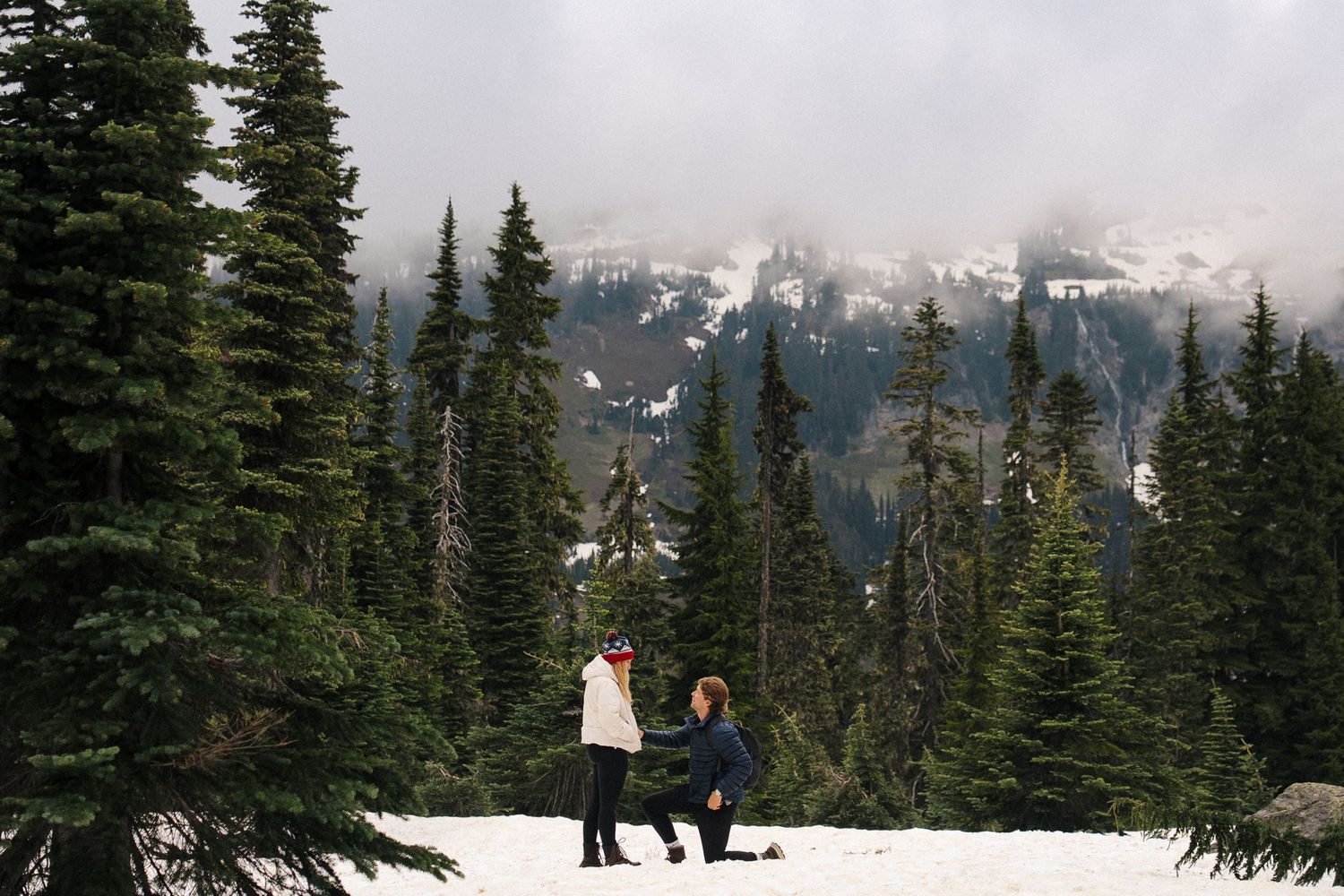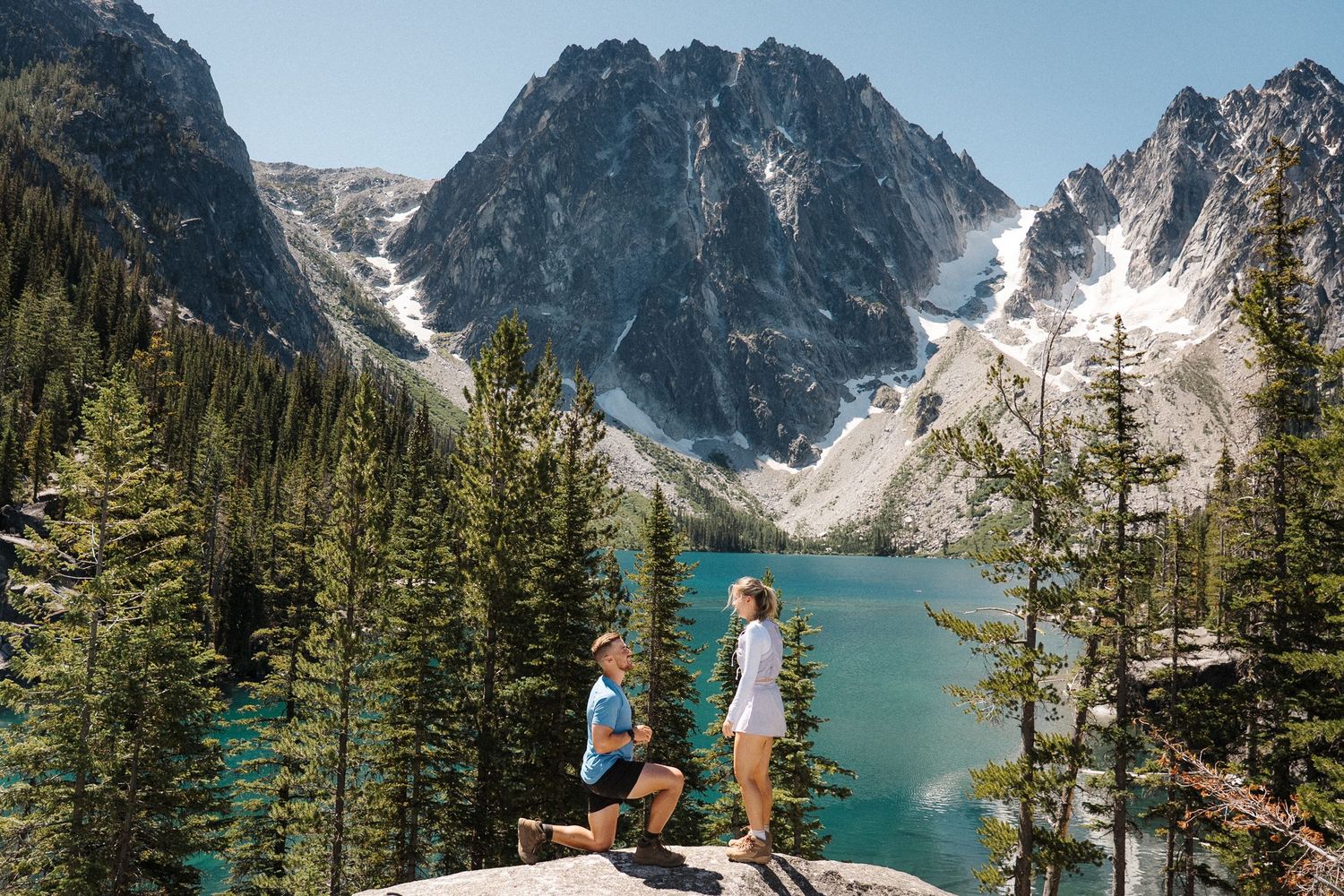
Some proposal locations are so good that you almost want to gatekeep them.
Not because couples don’t deserve to experience them, but because the internet can change a place fast. More foot traffic, more crowding, more pressure on the landscape.
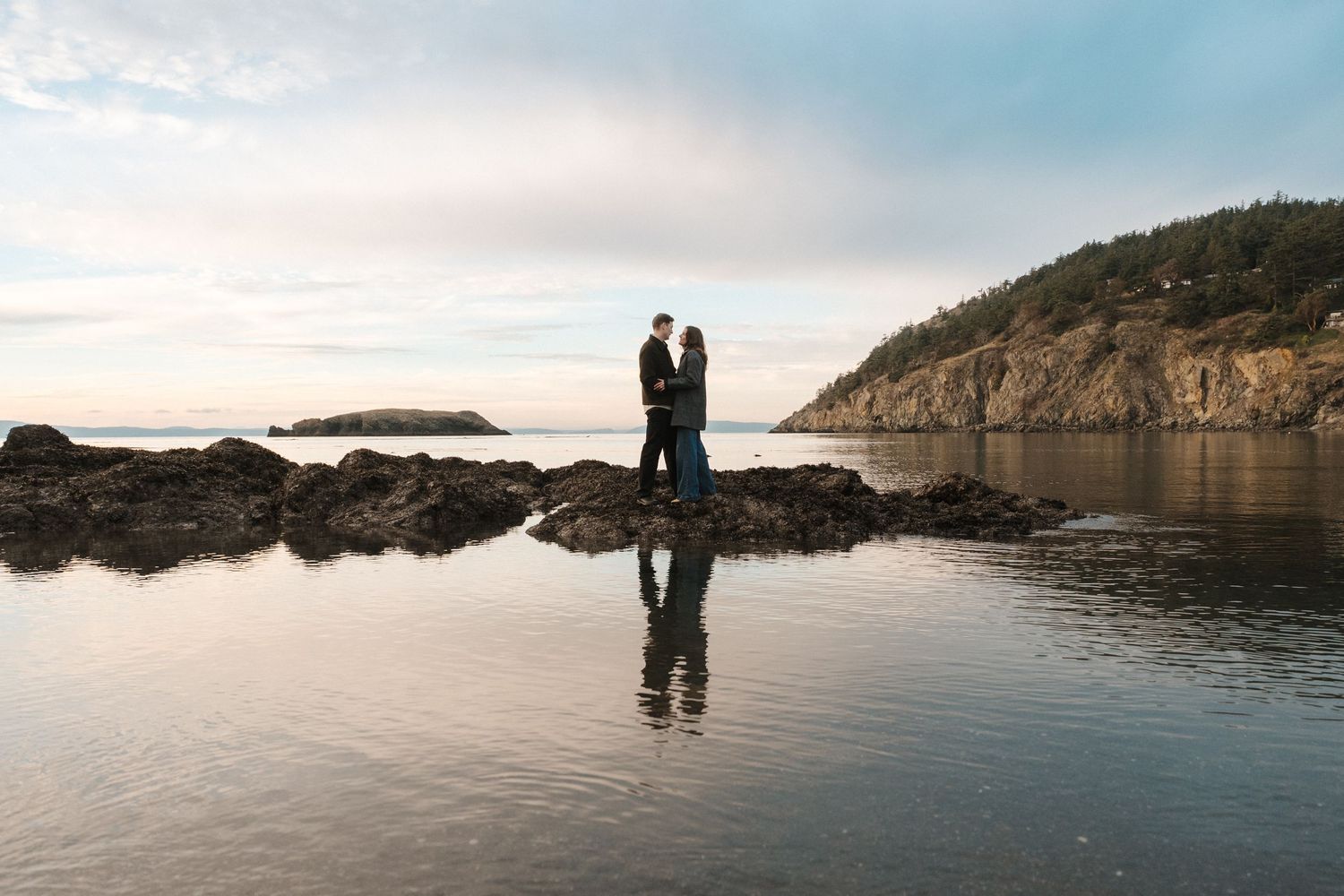
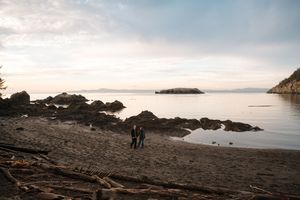
So for this story, I’m keeping the exact location private for preservation. What I can tell you is this: Jack proposed to Natalie on a bluff-lined beach in northern Washington, not far from Bellingham. Think big rocks, dramatic shoreline, and an open view across bright water that catches the winter sun.
If you’re planning a proposal in Washington and you want something nature-forward without a huge hike, this blog will give you a really realistic look at what it takes to pull off a surprise proposal cleanly. I’ll also share some gear notes from the session, plus the behind-the-scenes video that ended up becoming my most viewed Instagram reel.
Quick context: this was a fast turnaround proposal
Jack reached out at the start of December, and the proposal was at the end of December. So this wasn’t a “six months of planning” situation. It was a quick turnaround, and those can be the hardest ones to make feel effortless.
When Jack and I first talked, he kept things simple:
Natalie loves nature. They wanted something scenic. They didn’t want a crazy hike. They wanted a proposal that felt like them, not an overproduced setup.
That’s exactly the kind of plan I like working with. Simple does not mean boring. Simple usually means more real emotion, less stress, and a cleaner story in the final gallery.
If you’re curious about how my proposal coverage works in general, here’s my packages page:
Seattle Proposal Photography Packages
And if you want to see a range of proposal galleries and locations, start here:
Why I always arrive early
This proposal is a perfect example of why I build buffer into every surprise proposal plan.
I arrived early, got eyes on the area, and started looking for the best “hidden but effective” shooting angles. This spot has a lot of open space, so your positioning matters if you want the moment to stay private.
Then something happened that could have easily thrown the whole thing off.
There was another photographer already there photographing an engagement session.
In a lot of scenarios, that becomes awkward fast. Another photographer can accidentally step into your proposal location, or your partner can clock that a photo session is happening and start asking questions.
I walked over, introduced myself, explained we had a surprise proposal about to happen, and we coordinated. That little bit of pre-work saved the day. It also made the whole experience calmer for Jack, which matters. You don’t want to be mentally managing five different things right before you propose.
The plan: simple, scenic, minimal hiking, maximum payoff
The location we chose was ideal for what Jack described.
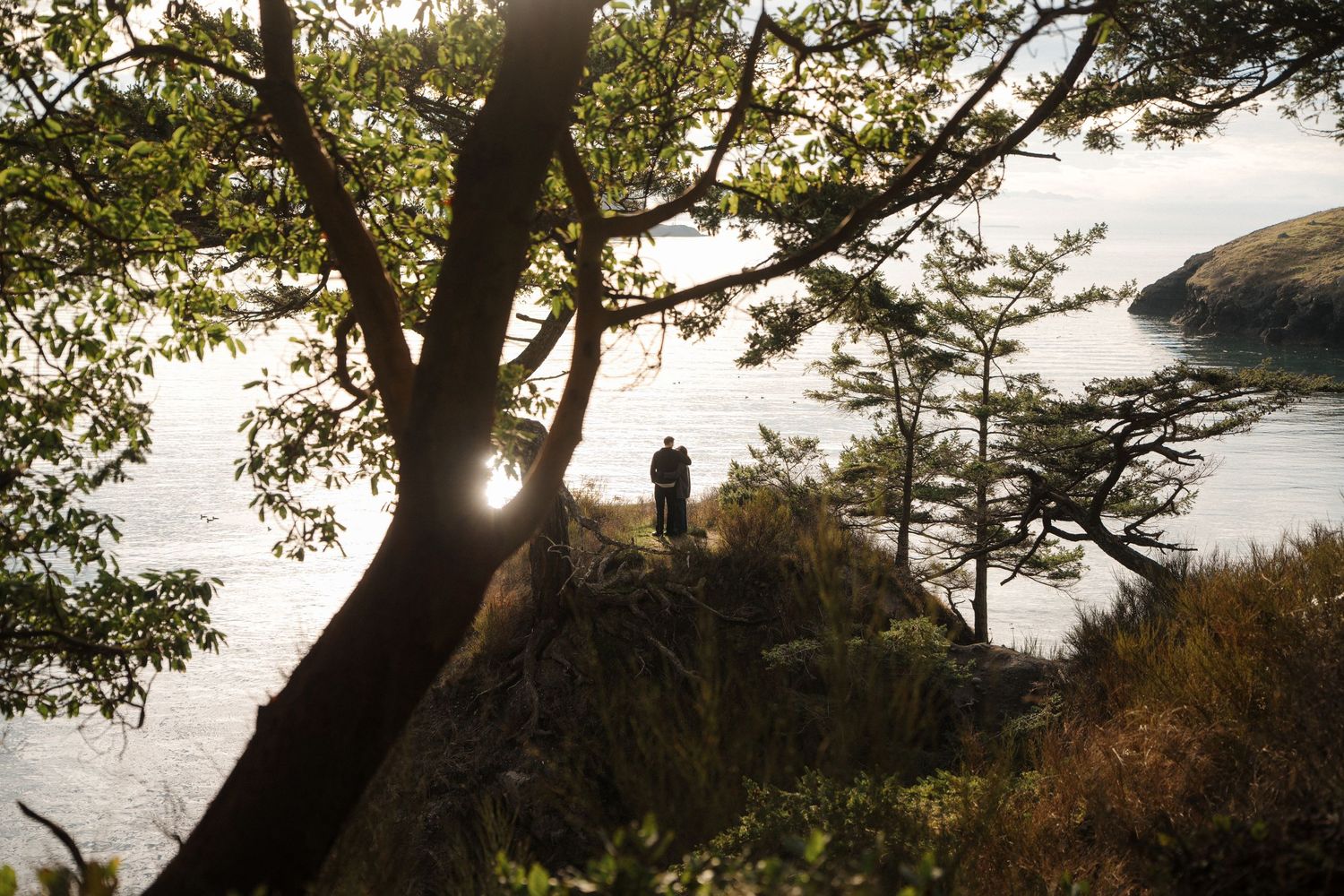
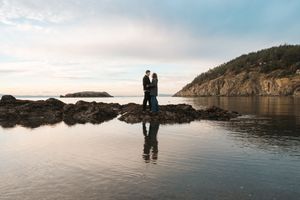
It’s close to the water, with natural bluffs and rocky features that make the scene feel dramatic without requiring a long hike. It’s the kind of place where you can take a short walk, get a wide-open view, and still feel like you’re in the middle of nature.
The strategy was:
Jack and Natalie would walk out toward a bluff-side area that feels a bit separated from the main foot traffic.
They would take a few minutes, settle in, and enjoy the view.
Jack would propose when they were naturally facing the water (so I could stay far back without being obvious).
After the proposal, I’d approach, introduce myself, and we’d roll into portraits.
If you’re planning a Washington proposal, that kind of structure is usually the sweet spot. It gives you room to stay natural, but it’s still intentional enough to protect the surprise.
The actual proposal moment (and how far away I was)
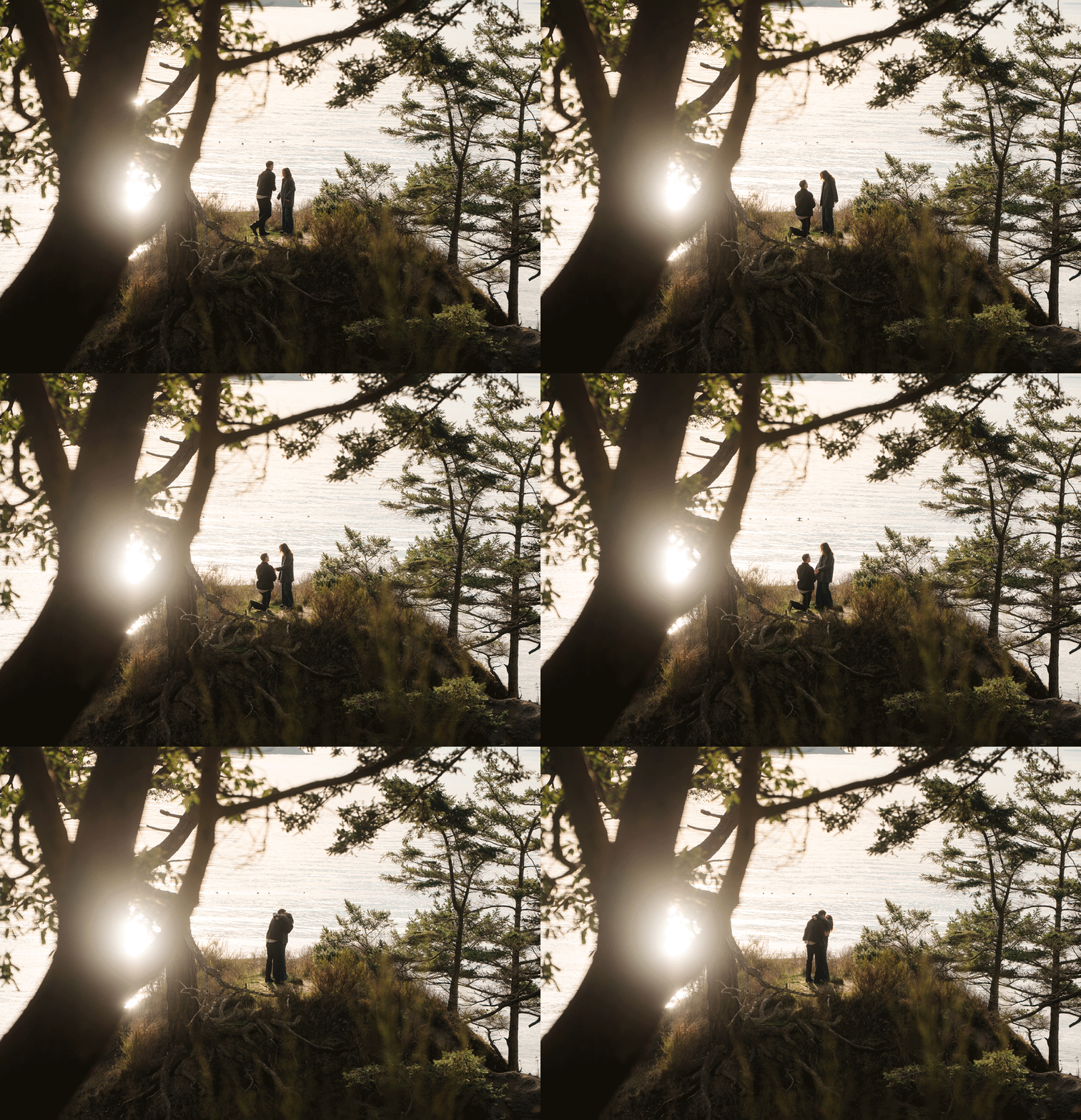
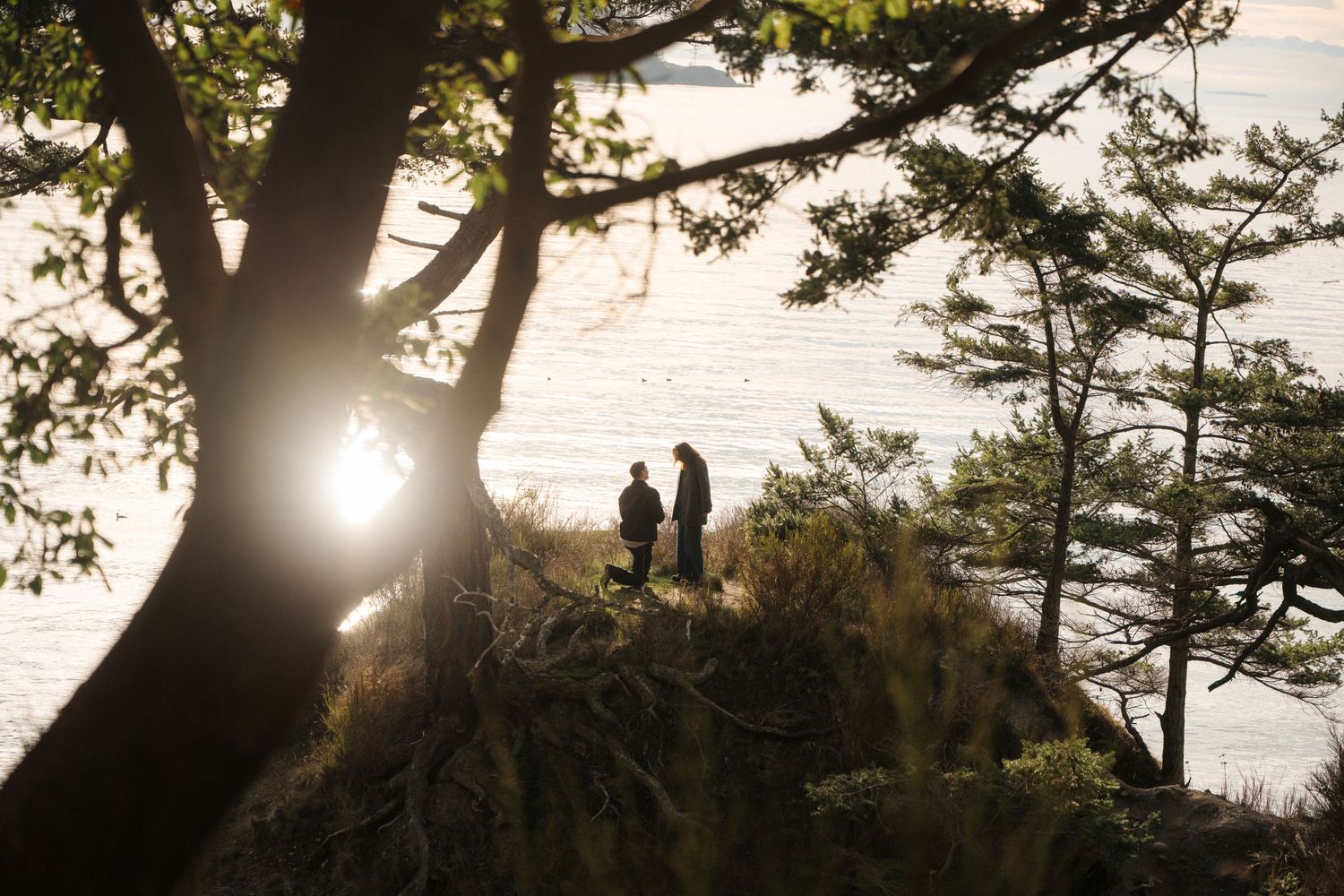
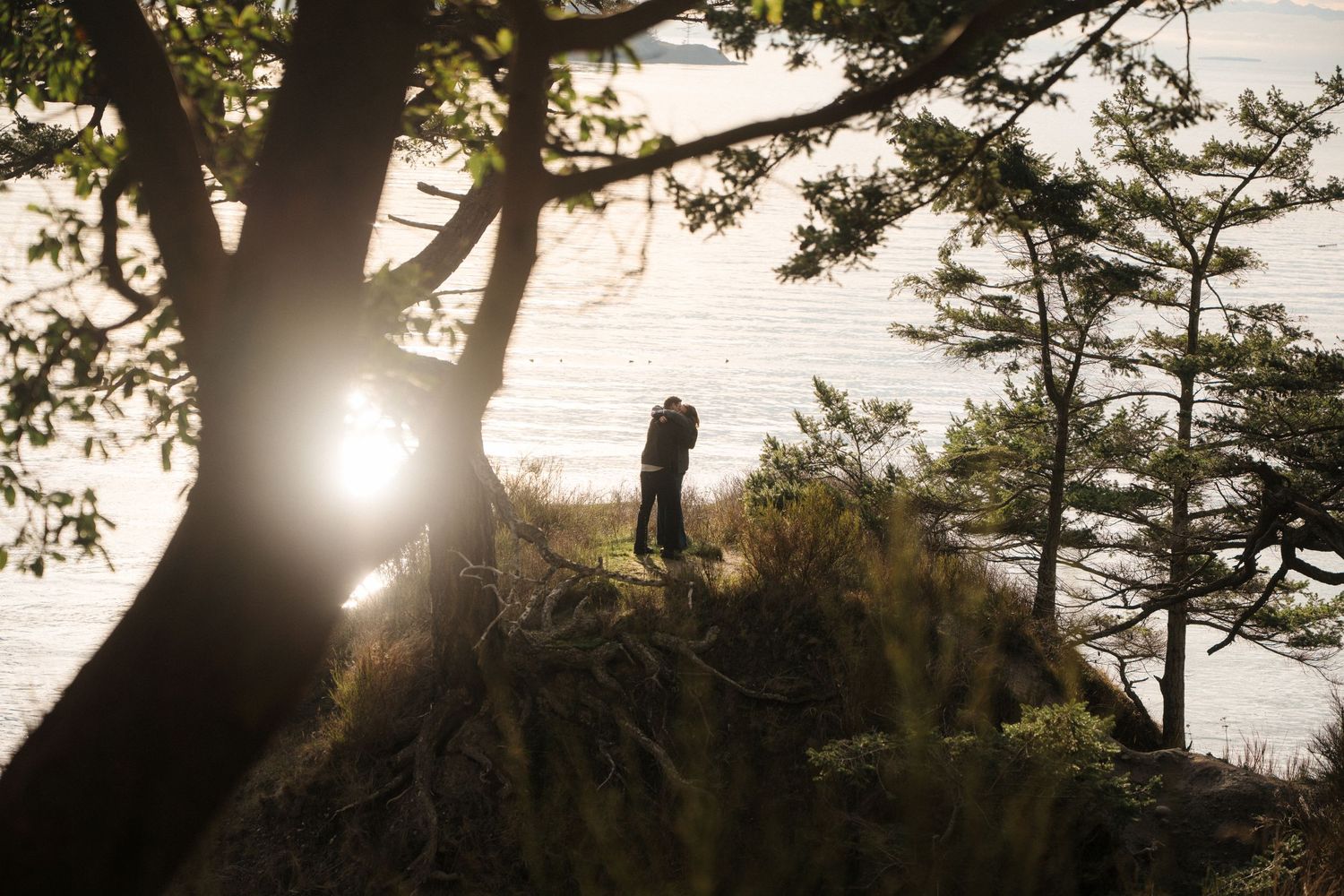
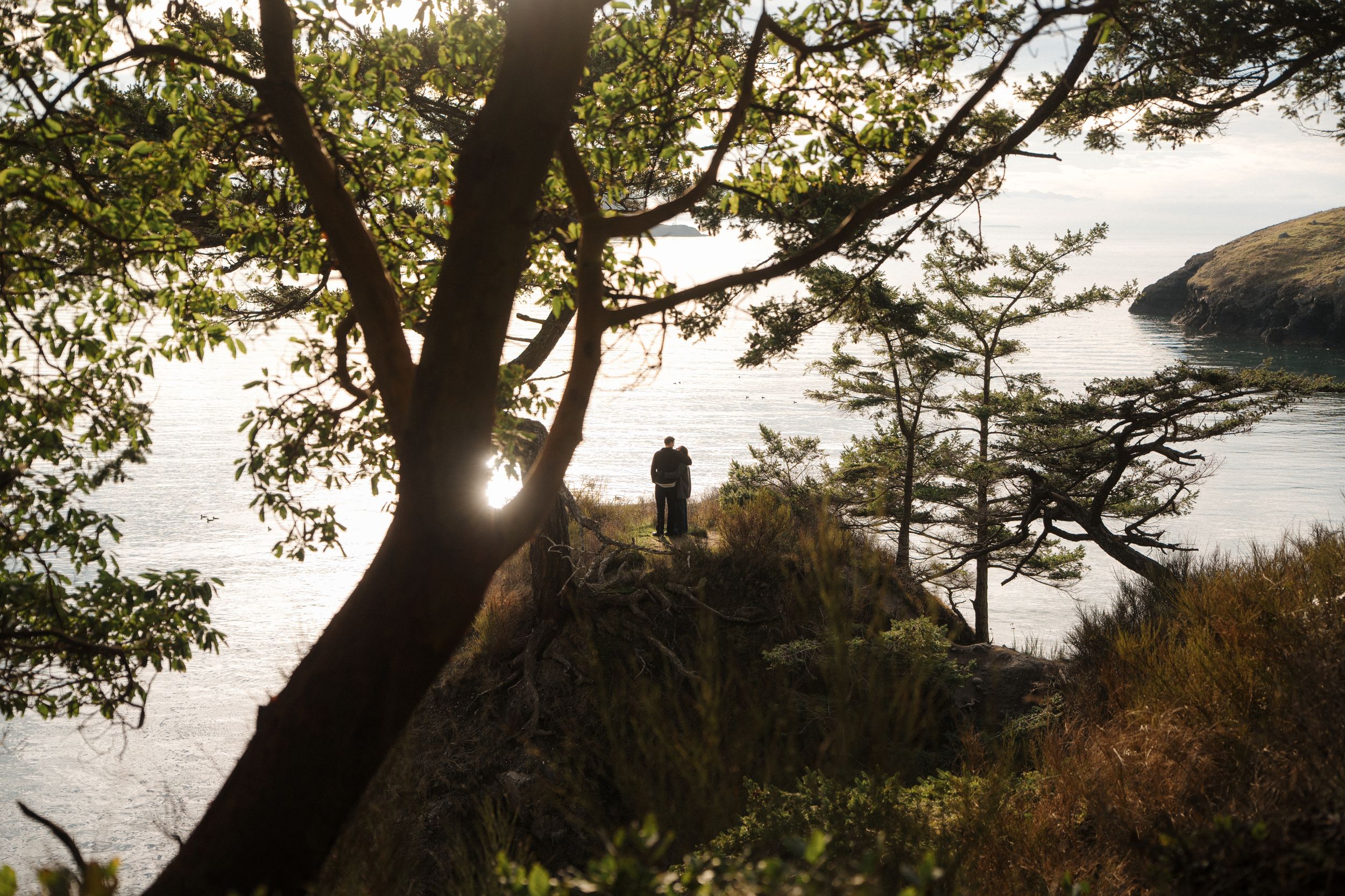
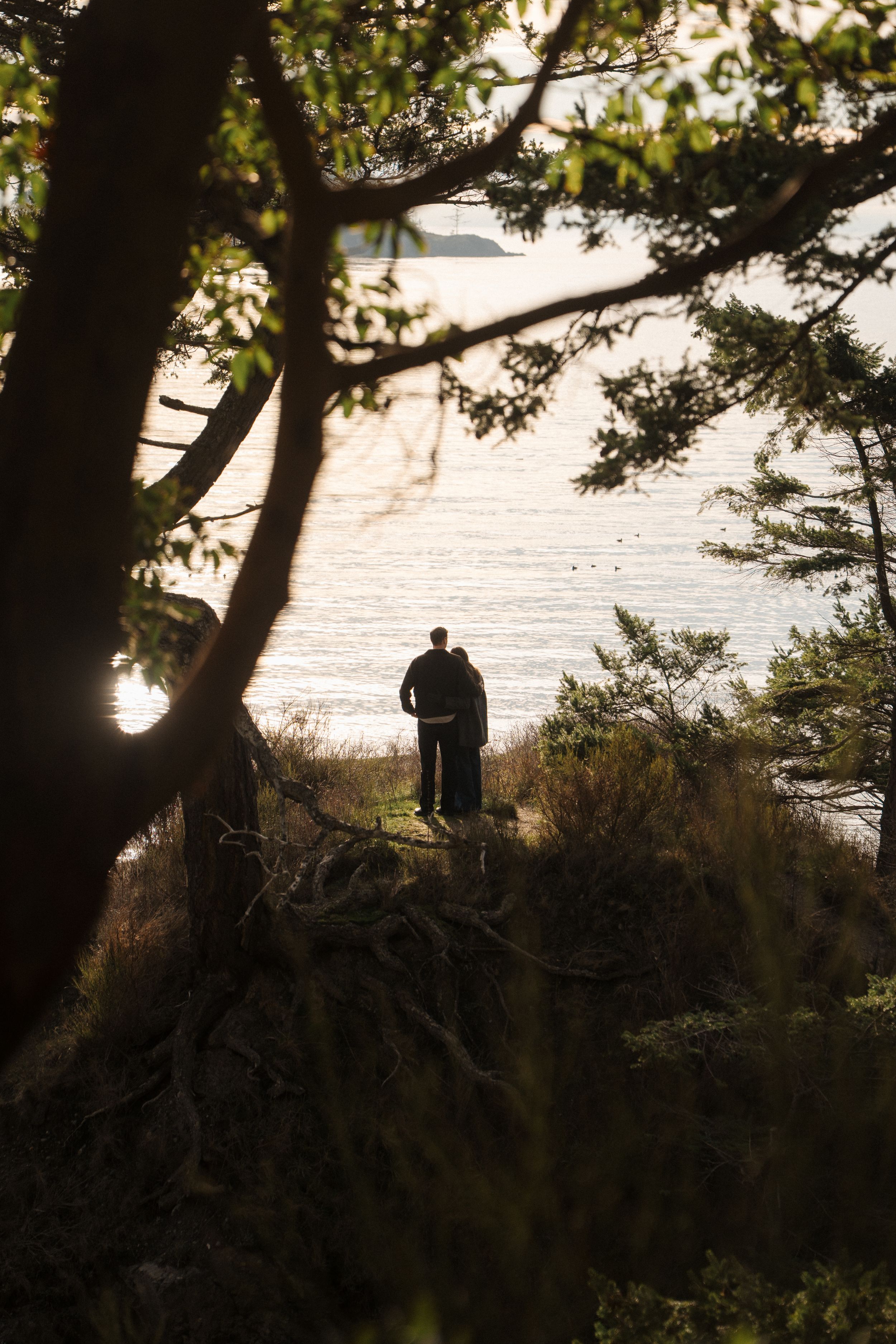
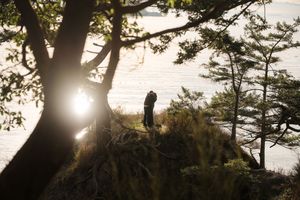
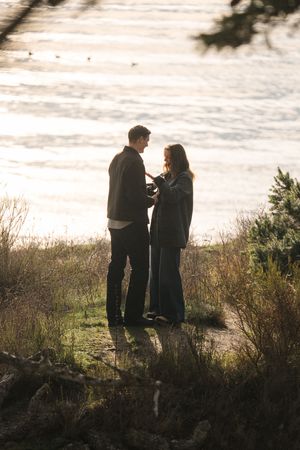
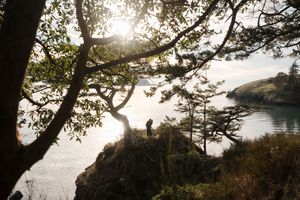
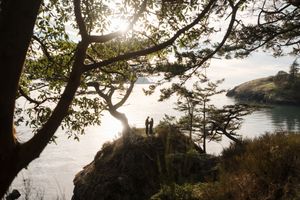
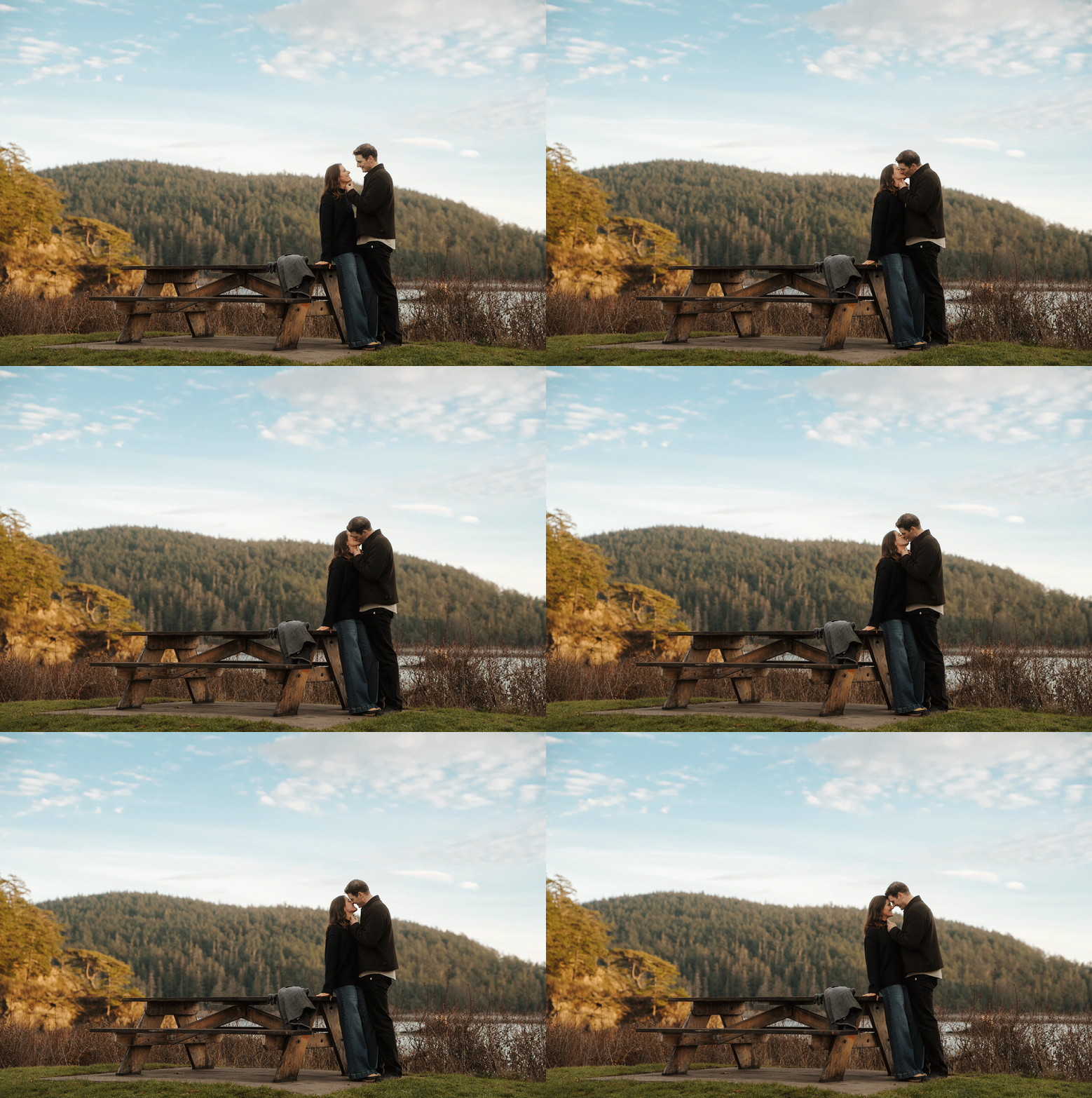
Jack came by with Natalie and walked out onto this bluff ledge area in the distance. They stood there for a while just taking it in, which I loved because it made the moment feel unforced.
Once I saw they were in position, I moved into my shooting spot.
I was roughly 100 to 175 feet away for the proposal itself.
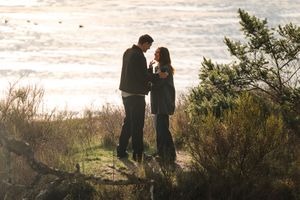
That distance matters. It keeps the moment private. It lets your partner stay present. It also creates a more cinematic feel in the photos, because you get wide frames that show the environment and the scale.
And even from that far away, I could hear Natalie’s surprise when Jack dropped down.
That’s one of my favorite things about proposal photography. Even if I’m physically distant, the emotion still lands. You can feel it.
The camera gear I used (and why it worked so well here)
I photographed this proposal on my Sony a7 IV bodies with two lenses that cover basically everything I need for a proposal like this:
Sony 28–70mm f/2.0 (G Master) (You can read my full review here)
Sony 70–200mm f/2.8 (G Master)
Here’s why that combo mattered on this day.
Wide shots that still feel intimate
On the 28–70mm, I was able to capture wide frames that showed the bluffs, rocks, and bright water behind them, without making Jack and Natalie feel tiny in the scene.
It’s not just “a landscape photo with people in it.” The wider perspective lets you feel where they are, while still keeping the moment emotional.
Tight emotional frames without stepping into the moment
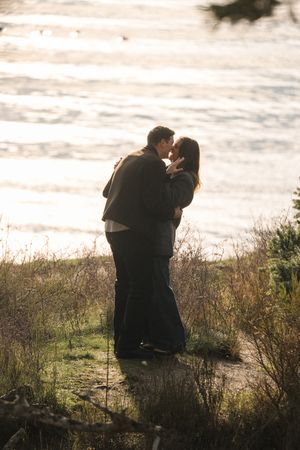
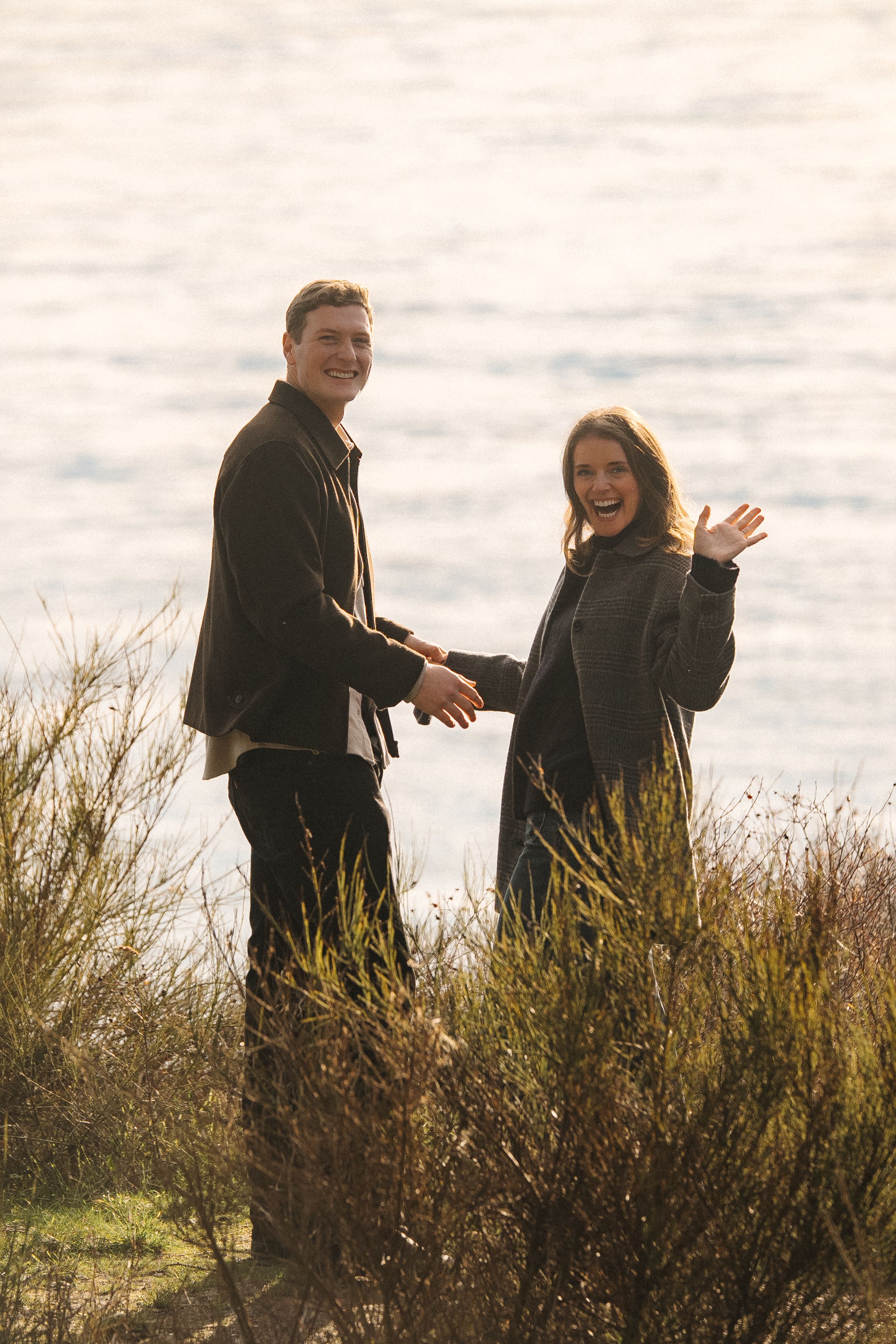
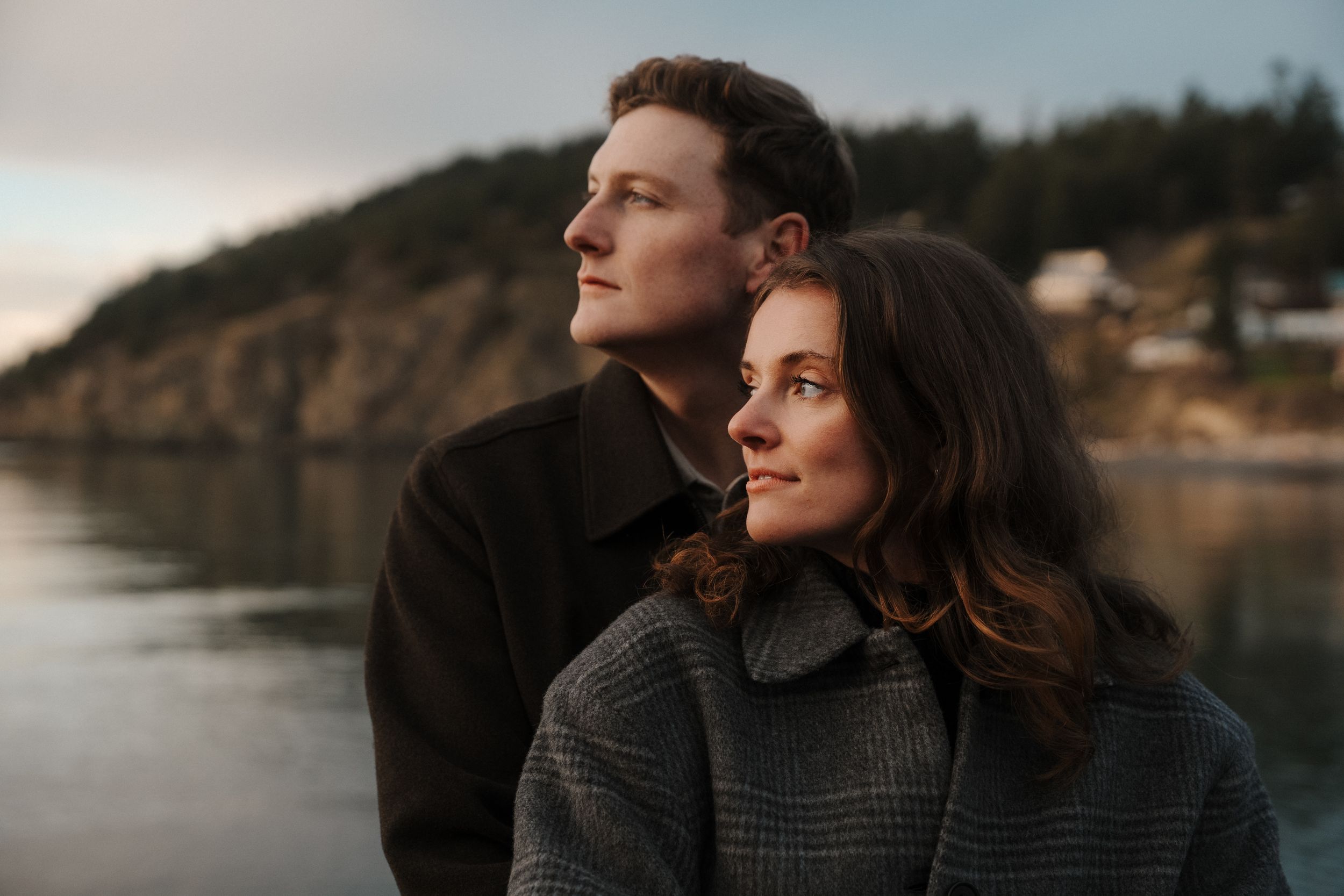
Then I swapped to the 70–200mm to get close emotional shots without physically moving closer.
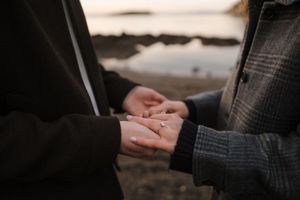
That lens is perfect for proposals because I can capture reactions, tears, hands, the ring moment, all while staying out of the couple’s space.
It keeps the moment clean and private.
Bright water, harsh highlights, and why dynamic range matters
The biggest technical challenge at this spot was the background.
The water was extremely bright, and the sun made the highlights intense. If you expose “normally” in that situation, the background blows out, and you lose detail. If you expose for the background, faces can get dark.
This is where the Sony dynamic range really helps.
I intentionally underexposed by a few stops to protect the highlights, then brought the exposure back in post. That gave me clean detail in the water and sky while still keeping skin tones natural.
You don’t need to care about the technical side to enjoy the photos, but this is a real example of why gear and experience matter in proposal photography. The moment is not repeatable. You want someone who can handle tricky light without panicking.
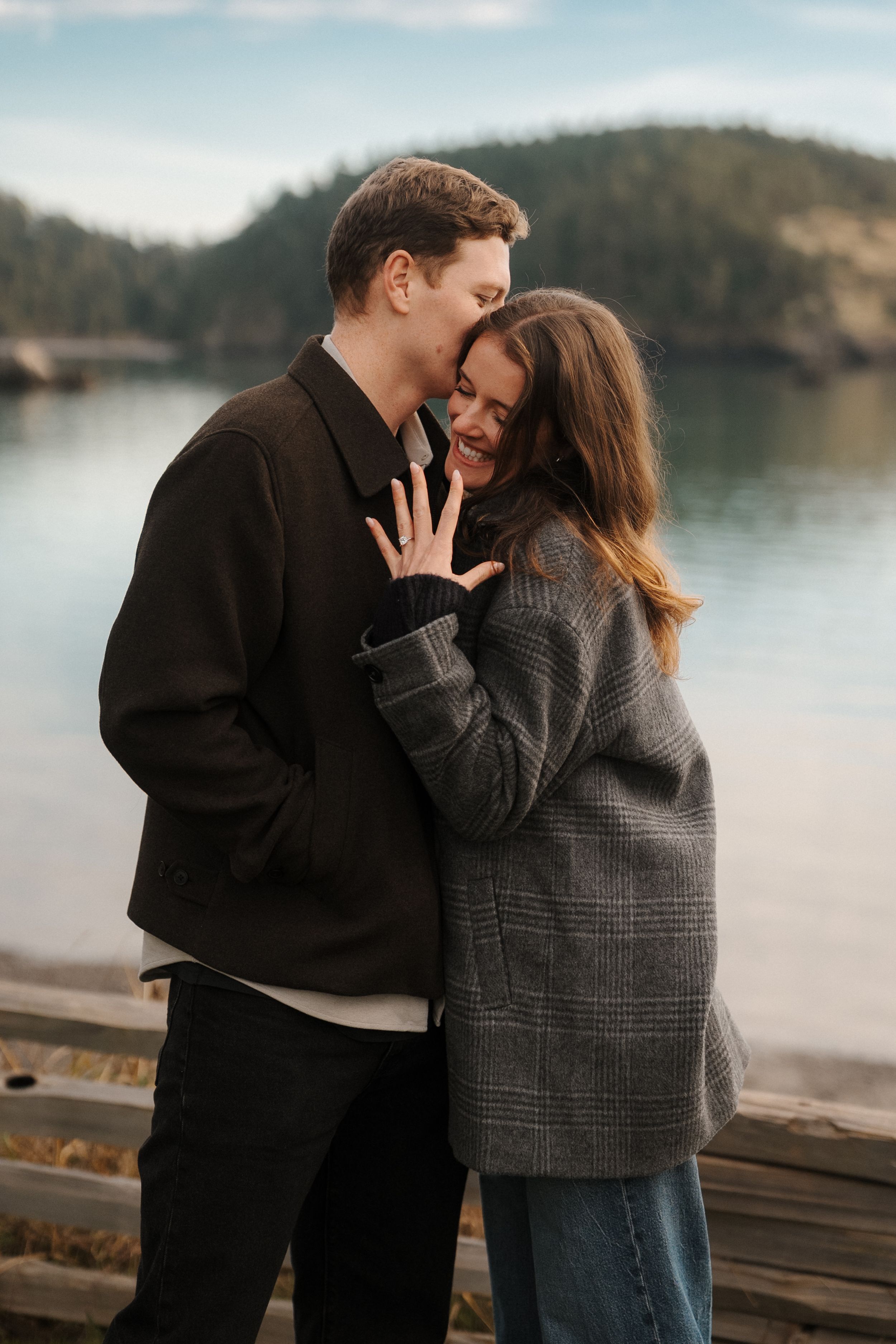
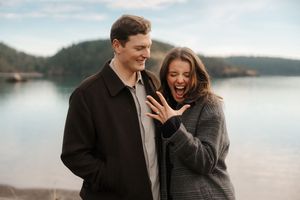
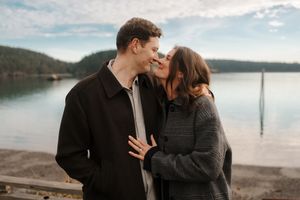
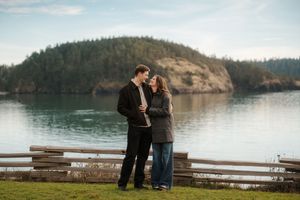
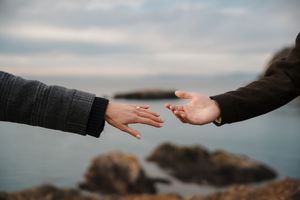
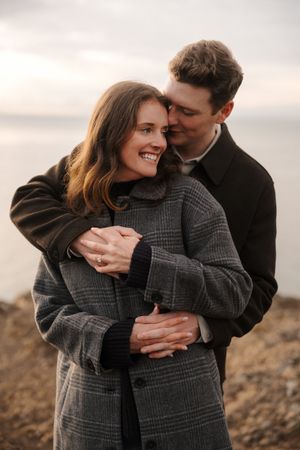
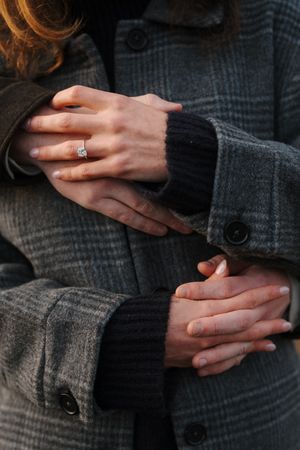
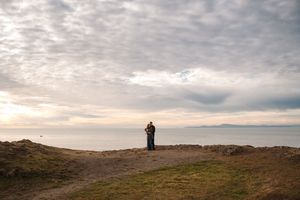
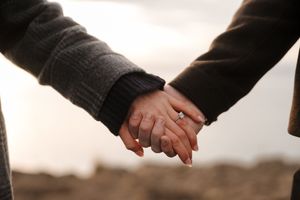
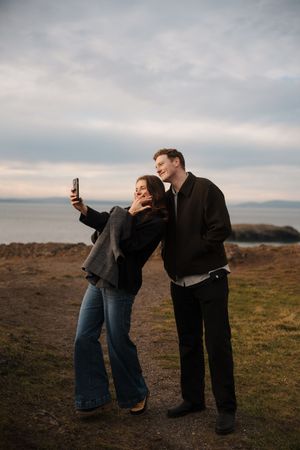
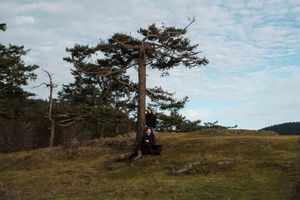
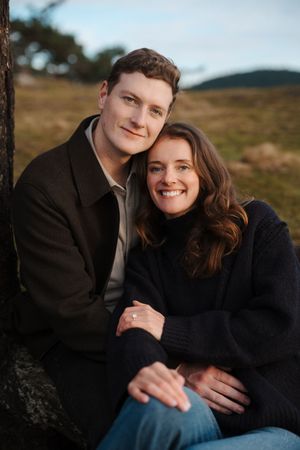
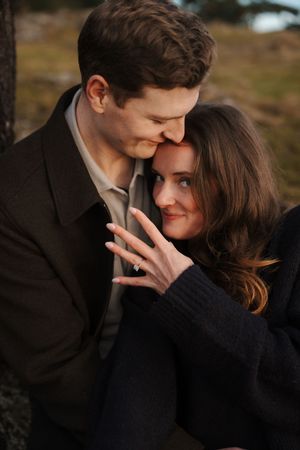
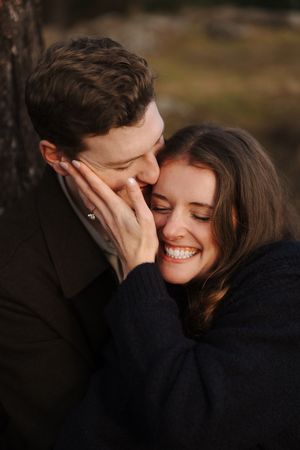
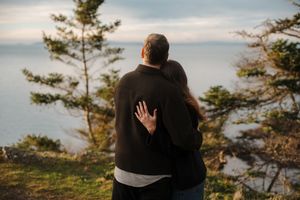
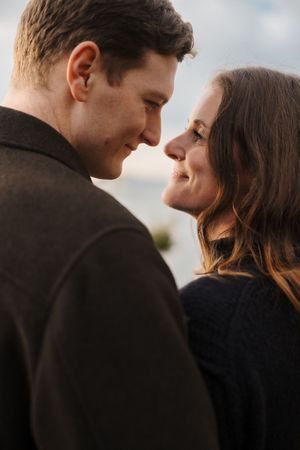
After the “yes”: portraits, movement, and letting the session feel natural
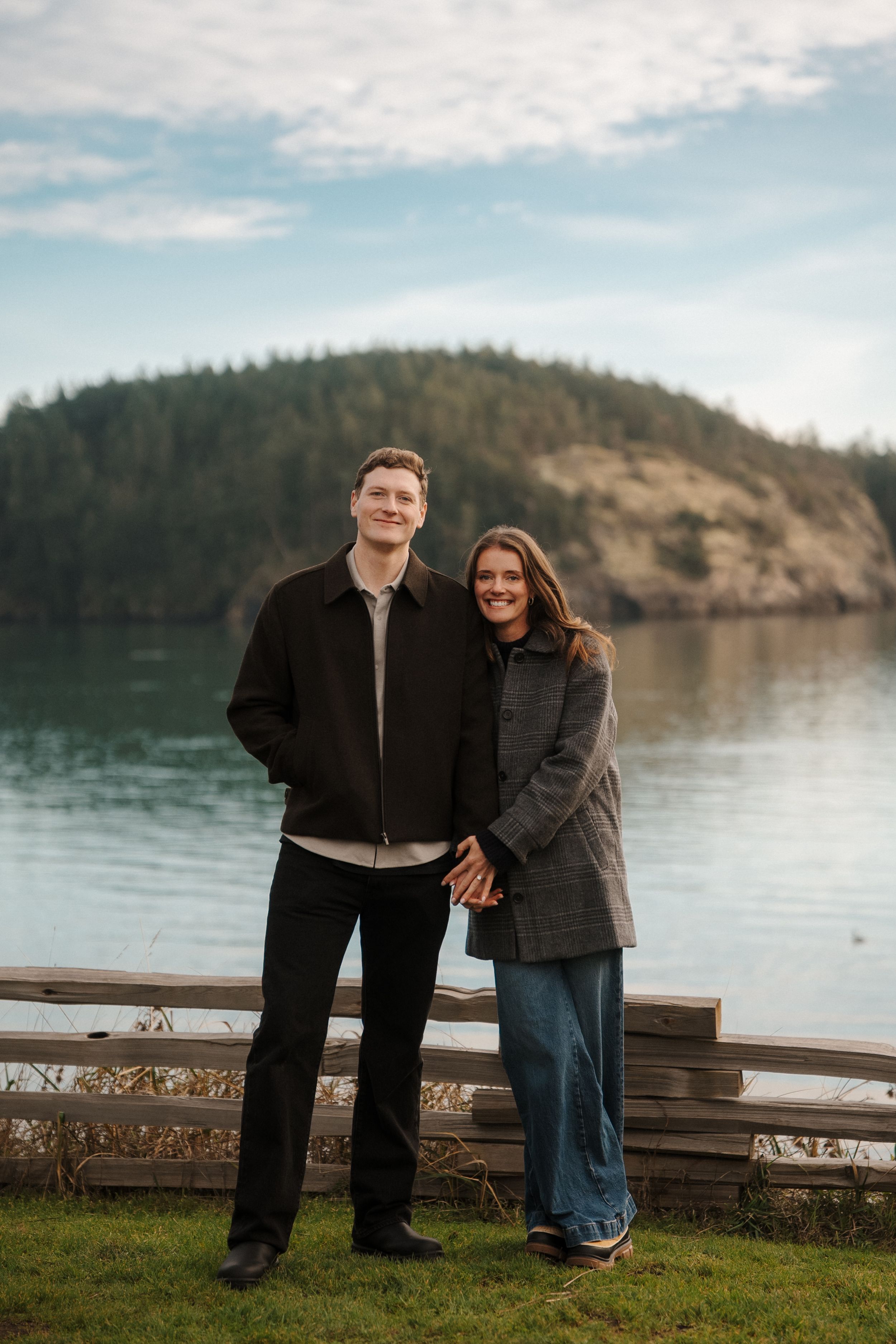
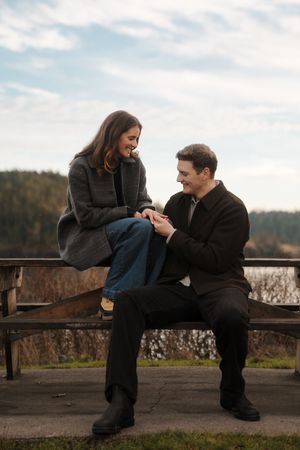
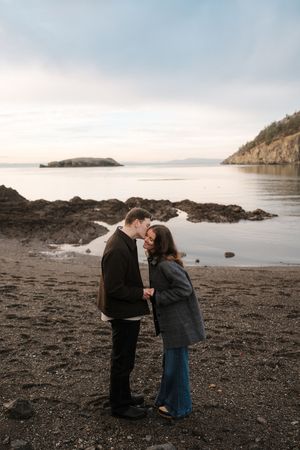
After Jack proposed and the initial “holy shit, this is happening” moment settled a bit, I walked up, introduced myself, and we rolled into portraits.
This is usually where couples relax.
They realize they don’t need to pose perfectly. They don’t need to do anything complicated. They just need to be together.
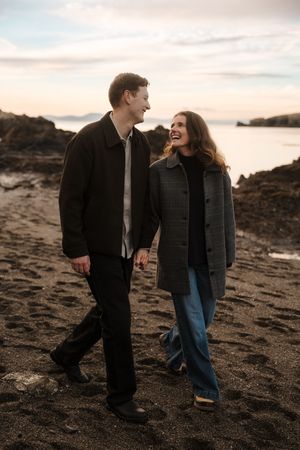
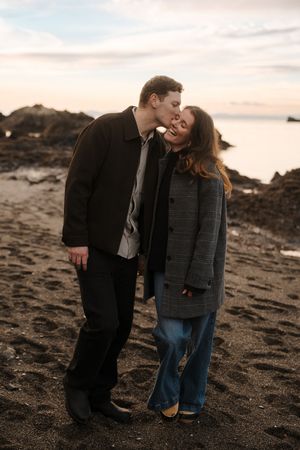
We walked around the area, leaned into the rocky shoreline textures, and used the bluffs and the open horizon as the backdrop.
It was winter, which means the air is crisp, the light changes fast, and the clouds can do really interesting things near sunset. We got exactly that. The colors and cloud texture were unreal as the light started to shift.
Jack had also brought some cute gifts, which gave us a few natural interaction moments that felt like them. Not staged, just little pieces of their story.
The behind-the-scenes video (Meta glasses) and the reel that took off
After I photographed the proposal, I also captured some video on my Meta glasses as the moment unfolded.
I posted it on Instagram, and it turned into my most viewed reel. At the time I’m writing this blog, it’s sitting at around 3.5 million views.
Here’s the reel link if you want to watch it:
https://www.instagram.com/reels/DTBpvNfErP-/
I’m sharing this because it shows something important: proposals move fast. The emotion is real, and it happens once. Having both strong photos and a short video clip can be an amazing way to relive the moment.
If you’re someone who cares about that, tell me when you inquire. I’ll help you think through what makes sense without turning the proposal into a production.
Planning tips for proposing in Washington (from a proposal photographer)
If you’re planning a proposal in Washington, here are the most important things I’d want you to know.
1) Choose a location that fits your partner, not the internet
There are amazing proposal locations all over Washington. But the “best” one is the one that matches your partner.
If Natalie loves nature but doesn’t want a huge hike, then a dramatic shoreline with minimal walking is the perfect fit.
2) Have a simple cue strategy
You do not need a complicated plan.
You just need a cue that helps me know when the moment is happening, without making you act weird.
A cue can be as simple as:
“I’m going to stand by that rock”
“Let’s stop here for a second”
A specific spot you walk to together
3) Build in buffer time
Surprise proposals run smoother when you are not sprinting through the plan.
Traffic happens. Parking happens. Timing shifts happen. If you’re stressed, your partner can feel it.
I’d rather you arrive early, take a breath, and let it unfold naturally.
4) Think about light, not just scenery
Sunset photos on the coast and up north can be insane, even in winter. But light changes quickly, and weather can shift.
This is why I always help with timing. The same location can look completely different depending on the hour.
5) If you want privacy, avoid oversharing the location online
This is personal preference, but for a lot of Washington nature spots, it’s worth being mindful.
I love sharing beautiful places, but I also respect keeping certain locations unnamed to preserve them.
FAQ: Washington Proposal Photography
How far in advance should I book a surprise proposal photographer in Washington?
Earlier is always safer, but I can sometimes accommodate last-minute proposals depending on my calendar. The earlier you reach out, the more options we have for timing and location planning.
What if I don’t know where to propose yet?
That’s normal. Tell me the vibe (beach, mountains, city, forest), how much hiking you want to do, and roughly where you’ll be staying. I’ll help you narrow it down.
How do you stay hidden during the proposal?
It depends on the location. Sometimes I’m far away on a long lens. Sometimes I blend in as a tourist. Sometimes I shoot from behind natural cover. The goal is always the same: your partner stays present and the moment feels private.
What should we do after the proposal?
Most couples do portraits right after while the adrenaline is still high. If you want to celebrate with friends or family after, we can plan for that too.
Do you help with the plan and timing?
Yes. Planning support is part of what I do for proposal clients. I’ll help you choose a spot, pick the best time for light and crowd levels, and build a simple cue strategy so the moment runs clean.
If you want to see how proposal packages work, start here:
Seattle Proposal Photography Packages
Final thoughts
Jack and Natalie’s proposal is a good reminder that “simple” can still feel epic.
A meaningful plan, a location that fits your partner, a little bit of buffer time, and a photographer who knows how to stay out of the way can make the whole thing feel calm and real.
If you’re planning a proposal in Washington and you want help choosing a spot, building a timeline, and making sure the moment is documented the right way, reach out with your date and a rough idea of what you’re imagining.
Here’s my contact page:
And if you want to browse more proposal work first: